
New Biomarker Identified For Response To A Specific Childhood Cancer Therapy
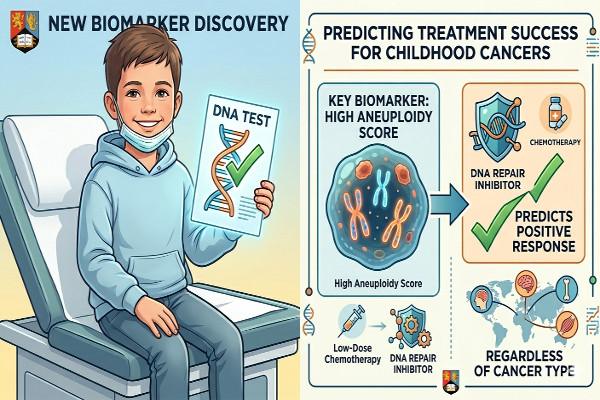
Researchers at the University of Birmingham discovered a new genetic indicator, called a “biomarker,” that can predict which children with hard-to-treat cancers will benefit from an advanced drug combination. The study focused on kids with high-risk, relapsed solid tumors, such as Ewing sarcoma and various bone or brain cancers, where standard treatment options are often exhausted and the chance of a cure is very low. Researchers tested a treatment pairing a low-dose chemotherapy drug with a specialized “DNA repair inhibitor” (a drug type more commonly used to treat adults) to see if it could stop these aggressive childhood cancers from growing.
The breakthrough came when scientists looked closely at the tumors of the children who responded positively to the treatment. They found that these successful tumors shared a specific genetic pattern known as a “high aneuploidy score,” which means the cancer cells contained an abnormal number of chromosomes. Remarkably, this score predicted treatment success regardless of the specific type of cancer the child had. This discovery marks the first time this specific genetic marker has been linked to positive treatment responses in a pediatric trial. It provides doctors with a vital roadmap to screen a child’s tumor in advance, allowing them to personalize care, confidently prescribe effective advanced therapies, and spare other children from ineffective treatments.
Read the full article