

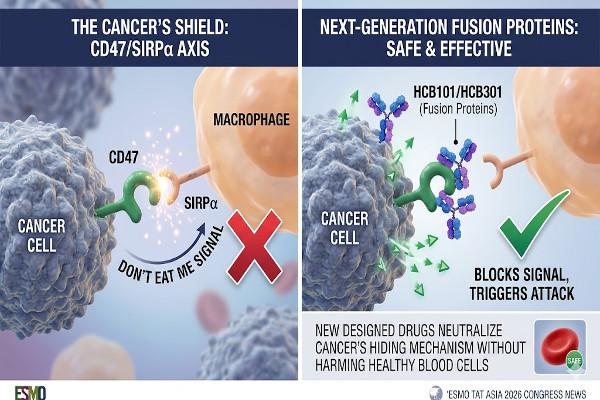
Targeting the CD47-SIRPα Axis Shows Potential For Promoting Antitumor Efficacy In Solid Tumors
A major step forward has been made in immunotherapy, specifically focusing on a cancer treatment strategy called the “CD47-SIRPα axis.” In short, cancer cells often use a protein called CD47 as a “don’t eat me” signal to hide from the body’s immune system. While blocking this signal helps immune cells find and destroy tumors, past versions of these drugs accidentally attacked healthy blood cells, causing dangerous drops in platelets and red blood cells (a condition known as cytopenia).
To fix this roadblock, researchers at the ESMO Congress presented findings on two new, redesigned fusion proteins (named HCB101 and HCB301). These next-generation drugs successfully shrank or stabilized advanced solid tumors—such as head and neck, colorectal, and ovarian cancers—in patients who had already failed multiple other treatments. Most importantly, the redesigned drugs managed to attack the cancer while leaving healthy blood cells largely unharmed, proving that this new wave of cancer therapy is both promising and much safer for patients.
Read the full article