
PET And CT Scans May Help Predict Outcomes In Bone Sarcoma
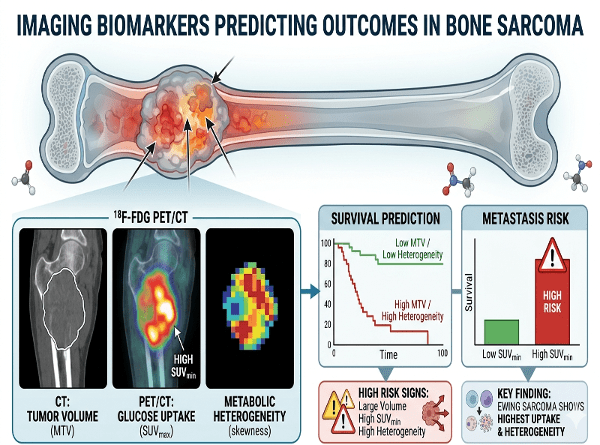
An article titled “Baseline ¹⁸F-FDG PET/CT-Derived SUVmin and Metabolic Heterogeneity as Predictors of Survival and Metastasis in Bone Sarcomas,” explores how advanced medical imaging can help doctors predict the outlook for patients diagnosed with bone sarcomas (aggressive bone cancers like osteosarcoma and Ewing sarcoma). The researchers looked back at the medical data of 44 patients who underwent a special type of scan called a PET/CT scan before starting their treatments. By looking at these initial scans, the study measured specific traits of the tumors, such as their total size, volume, how much sugar (glucose) they consumed, and how “heterogeneous”—or unevenly mixed—the cancer cells were inside the tumor.
In simple terms, the study found that a tumor’s physical size and how unevenly its cells behave can tell us a lot about how dangerous it is. Patients with much larger or higher-volume tumors generally faced lower survival rates and a higher chance of the cancer spreading (metastasizing) to other parts of the body. Furthermore, the scans showed clear differences between different types of bone cancer; for example, Ewing sarcoma tumors consumed sugar at much higher rates and were significantly more structurally uneven compared to osteosarcomas. Ultimately, the researchers conclude that analyzing these detailed imaging details before treatment begins can provide doctors with a powerful tool to identify high-risk patients early, helping them tailor more aggressive or personalized therapies.
Read the full article
New research, new scans, and new drugs! Praying for success!